Table of Contents
If you want to increase YouTube comments, the fix is probably not what you think. Most creators assume the answer is asking louder, asking more often, or adding a generic “comment below” at the end of every video. But after looking through the comment sections of successful channels across different niches, the real pattern becomes clear pretty quickly: viewers comment when a video gives them something from their own experience to bring to the conversation. Not because someone told them to.
That one shift in thinking changes everything about how you approach your audience.
Why Your YouTube Videos Get Views but Few Comments
A video with fifty thousand views can sit at fifteen comments. Another video from a smaller channel, half the traffic, three hundred comments. The difference is almost never the topic. It is whether the video gave viewers something personal to react to.
Videos that generate discussions almost always have one of these elements: a relatable struggle, a clear opinion that viewers want to agree or push back on, a result that viewers want to compare against their own, or a question that requires actual reflection to answer. Purely informational content that delivers facts without any personal angle tends to go quiet. Viewers absorbed something and moved on. The video was a delivery, not a discussion.
YouTube’s own creator resources consistently highlight comments as a key signal that content is driving real engagement. But what they cannot tell you is why some videos earn that signal and others do not. That part comes down to whether you gave viewers a reason to speak.
7 Ways to Increase YouTube Comments
Here are 7 easy steps that can help you to grow engagement on your videos.
Ask Open-Ended Questions
“Have you tried this before?” is a dead end. Yes or no, and then nothing. The conversation has nowhere to go.
Open questions that reference a specific moment or outcome pull actual responses. The more specific your question, the more specific the answers, and specific answers generate replies from other viewers because there is something concrete to react to.
Instead of: “Comment below if you found this helpful.”
Try: “What part of this actually made a difference for you, and why?”
Instead of: “Have you ever done something like this?”
Try: “What happened the last time you tried this, and would you approach it differently now?”
Instead of: “What do you think?”
Try: “Do you think this approach is realistic for most people, or is something missing from the picture?”
Notice what the better versions do. They push toward reflection. They make a one-word answer impossible. And they invite nuance, which means viewers who answer differently will respond to each other, not just to you.
Use Experience-Based Prompts
“Comment below if you found this helpful” gives viewers nothing to work with. “What was the hardest part when you first tried this?” assumes experience, invites reflection on a specific moment, and opens the door for viewers to compare their answers with each other. Suddenly the comment section has a life of its own.
Experience-based questions work because commenting feels natural. The viewer is not doing something for you. They are sharing something for themselves, and your video was the trigger.
Reply to Comments Early
The first day after publishing is when your comment section is most alive. If you show up in that window and reply to a handful of comments, viewers come back to check. They often leave another comment. The activity compounds. If you ignore the section entirely, it goes quiet fast and rarely recovers.
Replying early also signals to new viewers scrolling the comments that this is an active space. When someone sees a creator genuinely engaging with responses, they are far more likely to add their own. It takes ten minutes and it changes the entire energy of the section.
Pin a Discussion Starter
A pinned comment is prime real estate that most channels waste on “thanks for watching.” Instead, use it to open a specific question. Something like: “Curious what approach most of you take here. Drop your answer below and I’ll reply to as many as I can.”
That one change greets every viewer who scrolls to the comments with an active invitation, signals that you are present, and gives the first wave of commenters something to respond to before they have read anything else. YouTube’s comment management tools make this easy to set up right after publishing.
Some creators use the pinned comment to share something they forgot to cover in the video. Others use it to add context or acknowledge a mistake. Both approaches generate replies because viewers appreciate transparency and want to engage with updated information.
Share Opinions Instead of Only Facts
Purely informational content that delivers facts without any personal angle tends to go quiet. Viewers absorbed something and moved on. But when you take a position, when you say “I think most people approach this the wrong way” or “here is what I actually believe about this,” you give viewers something to agree with, push back on, or build from.
You do not need to be controversial. You just need to have a point of view. A clear opinion is an invitation. It tells viewers that this is not just a delivery of information, it is a conversation worth joining.
Create Videos That Encourage Predictions
When viewers feel informed enough to have a take, and when the outcome is genuinely uncertain, they will voice that take before they even know if they are right. The psychology behind it is straightforward. Predicting an outcome is a low-effort way to participate in something. Viewers do not need to have tried anything, do not need expertise, and do not need to think very hard. They just need a gut feeling, and your video gave them the context to form one.
The question to ask yourself before publishing is: does my viewer have enough information to form an opinion about what happens next? If the answer is yes, you have already done most of the work of generating comments before the video even goes live.
Build a Community Around Discussion
A comment section does not happen overnight. It is the result of an audience that has learned your channel is a place worth speaking up in. When viewers see a creator consistently showing up, asking real questions, and treating the comment section as a conversation rather than a metric, they start to think of it as their space too.
That culture builds over time. Viewers talk to each other, not just to you. Someone’s take gets a reply from another viewer who saw it differently. Those side conversations have nothing to do with you at all, and that is exactly the kind of community behavior that turns casual viewers into subscribers who keep coming back.
What Makes People Leave Comments on YouTube?
Viewers usually comment when one of a few things happens.
They feel seen. Something in the video reflects their experience so accurately that they need to say it out loud. That recognition pulls words out of people who would not normally stop to type anything.
They have something to add. If a viewer knows something that contradicts or builds on what was said, they will often comment to fill that gap. This is not negativity. It is engagement. The video sparked something and they had to respond.
They want to share their own result. Especially in tutorials and reviews, viewers who have tried the thing being discussed want to say what happened when they did. This is one of the most reliable comment drivers there is.
They feel like someone will read it. If a creator visibly replies to comments, new viewers pick up on that when they scroll the section. It signals that the comment section is a real place, not a dead end.
Why Viewers Stay Silent Even When They Enjoy a Video
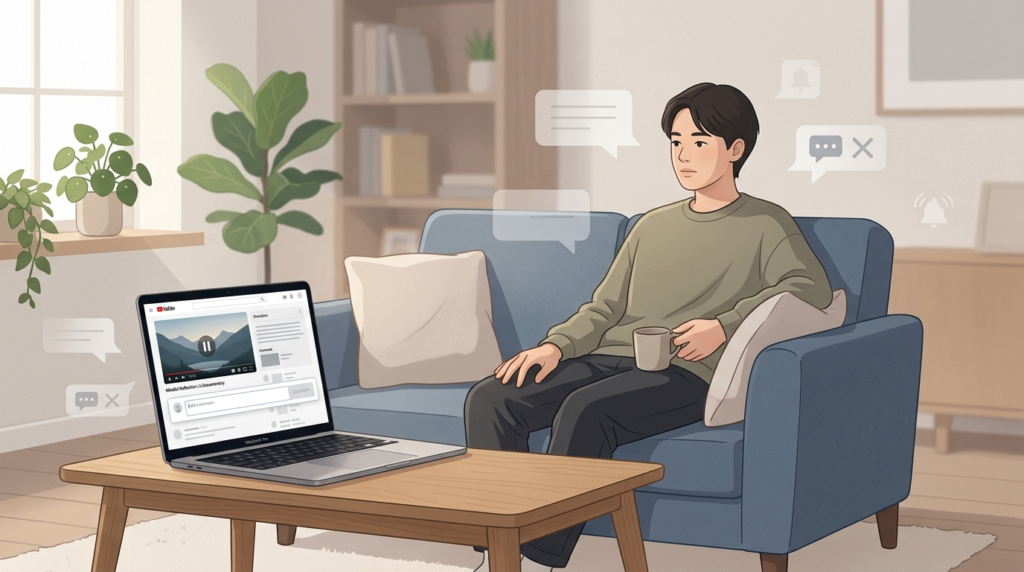
Here is something that trips up a lot of creators: a viewer can watch your video all the way through, click like, even subscribe, and still leave zero comments. Not because anything was wrong. Because nothing specifically pulled them into the conversation and increase Youtube comments.
Most viewers on YouTube are passive consumers by default. That is not a criticism of them. It is just how people interact with content. Watching is effortless. Commenting requires a decision, a moment of deliberate effort where someone stops, thinks about what they want to say, types it out, and hits post. That is a much bigger ask than most creators appreciate.
Enjoying something does not automatically create the urge to speak. Think about how many articles you have read, songs you have heard, or videos you have watched that you genuinely liked but never said a word about. You moved on. The content was good enough to consume but it did not give you anything specific to say. That is the experience most viewers have with most YouTube videos, even the good ones.
The problem is that many creators interpret silence as indifference. They assume if nobody commented, the video did not land. Sometimes that is true. But more often, the video just did not create a clear opening. Viewers had no obvious entry point, no moment where they thought “I actually have something to say about this,” and so they kept scrolling.
This is why the usual advice of “just ask for comments” falls flat so often. Asking a passive consumer to become an active participant is not enough on its own. You have to give them a specific reason to make that shift. A prompt that requires real thought, a moment in the video that mirrors their own experience, a question they feel qualified to answer. Without that, even your most loyal viewers will watch, enjoy, and disappear without a word.
Another interesting thing happens once viewers start engaging. Many people leave comments and then completely forget about them. Later, they want to revisit a discussion, check whether someone replied, or find a comment they left on a specific video. If you’ve ever struggled with that, this guide on how to find your comments on YouTube can help you locate your previous interactions and stay involved in ongoing conversation.
Case Study: Why Ryan Trahan Gets So Many Comments
Ryan Trahan is worth looking at carefully because his comment sections regularly outperform channels with similar subscriber counts, and he does not make inflammatory content to get there. There is no drama baiting, no manufactured controversy. Just a format that happens to be built almost perfectly for generating discussion.
Why Viewers Predict Outcomes
His challenge videos follow a simple but psychologically loaded structure: here is the situation, here are the constraints, now watch what happens. That setup does something most content does not do. It creates an information gap while simultaneously giving viewers enough context to form their own opinion about what will happen next.
That is the trigger for prediction comments. When viewers feel informed enough to have a take, and when the outcome is genuinely uncertain, they will voice that take before they even know if they are right. “There is no way this works.” “He is going to run out of money by day three.” “I give it two episodes.” These are not responses to a question Ryan asked. They are a natural reaction to a format that made them feel invested before the video was halfway through.
The psychology behind it is straightforward. Predicting an outcome is a low-effort way to participate in something. Viewers do not need to have tried anything, do not need expertise, and do not need to think very hard. They just need to have a gut feeling, and the video’s structure gave them the context to form one.
Why Challenge Videos Create Discussion
What makes the challenge format especially effective for comments is that it creates at least two natural comment windows on the same video. The first is during or just after watching, when viewers react to what they predicted or did not predict. The second comes later when people who discover the video earlier in the series come back after watching the conclusion.
After the outcome is revealed, a completely different wave of comments arrives. “I cannot believe that actually worked.” “Called it.” “I was so wrong about this.” These post-outcome reactions are comments responding to their own earlier investment, not to anything Ryan said or asked in the video itself. That self-referential loop is rare, and it keeps videos active in the algorithm far longer than standard content.
Viewers also talk to each other inside the comment section rather than directing everything at the creator. Someone’s prediction gets a reply from another viewer who predicted the opposite. That side conversation has nothing to do with Ryan at all. The comment section becomes a space where the audience processes a shared experience together, which is exactly the kind of community behavior that turns casual viewers into subscribers.
The actual lesson is not to copy the challenge format. It is to understand what that format does to viewers emotionally and then find ways to recreate that feeling inside your own content. Any niche can build stakes. A personal finance creator can frame a decision as a real dilemma with two genuinely competing options and let viewers weigh in before revealing what they chose. A fitness creator can document a process with a stated goal and a real deadline, making the outcome something viewers actually want to see. A tutorial creator can share a before state clearly enough that viewers form expectations about what the after will look like.
For creators, these discussions can reveal a lot about their audience. Sometimes you may want to track recurring commenters, identify highly engaged community members, or locate comments from a specific user participating in a discussion. If you need to find YouTube comments by username, this find YouTube comments by username guide explains several ways to do it and can be useful when managing active communities.
Common Mistakes That Reduce YouTube Comments
Asking Generic Questions
“Comment below” with nothing attached is the equivalent of walking into a room and saying “say something.” Viewers need to know what to say. Without a real prompt, most will not bother. Generic calls to action tell viewers you want engagement but give them absolutely nothing to engage with. The more vague the ask, the easier it is to scroll past.
Ignoring Your Comment Section
The first day after publishing is when your comment section is most alive. If you show up in that window and reply to a handful of comments, viewers come back to check. They often leave another comment. The activity compounds. If you ignore the section entirely, it goes quiet fast and rarely recovers.
Making Videos With Nothing to Discuss
If your content is entirely procedural with no opinion, no personal angle, and no moment of genuine stakes, it will generate views and almost no conversation. People can appreciate a video without having anything to say about it. Give them something to respond to.
The Best Pinned Comment Strategy
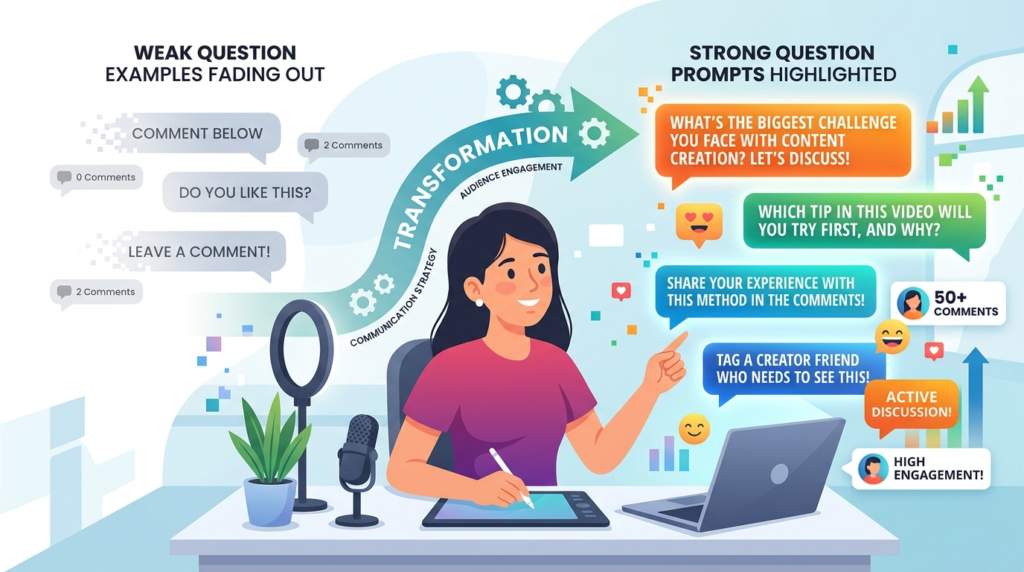
A pinned comment is prime real estate that most channels waste on “thanks for watching.” Instead, use it to open a specific question. Something like: “Curious what approach most of you take here. Drop your answer below and I’ll reply to as many as I can.”
That one change greets every viewer who scrolls to the comments with an active invitation, signals that you are present, and gives the first wave of commenters something to respond to before they have read anything else. YouTube’s comment management tools make this easy to set up right after publishing.
Some creators use the pinned comment to share something they forgot to cover in the video. Others use it to add context or acknowledge a mistake. Both approaches generate replies because viewers appreciate transparency and want to engage with updated information.
The most reliable way to increase YouTube engagement is not a tactic. It is a mindset shift. Stop thinking about the comment section as a metric to optimize and start thinking about it as a conversation worth showing up to. Make content with a real point of view. Ask questions that require reflection. Reply to comments in that first day when the section is alive. Pin something that models the kind of discussion you want to have. And build that culture consistently over time, because the comment section you want already exists in the viewers you have. You just have to give them a reason to show up.
Final Thoughts
The most effective way to get more YouTube comments is not by finding a secret trick or asking viewers to comment more often. It comes from creating videos that make people want to join the conversation. When viewers feel like their opinion matters, their experience is relevant, or they have something valuable to add, comments happen naturally.
Focus on creating content with a clear point of view. Ask questions that make people think instead of questions that can be answered with a simple yes or no. Spend time in your comment section, especially during the first day after publishing when discussions are starting to form. Use pinned comments to guide the conversation and show viewers that you genuinely care about their input.
Most importantly, be consistent. Strong comment sections are built over time. The channels with the most active communities are usually the ones that have spent months or years encouraging real discussion and making viewers feel heard.
The audience you need is probably already watching your videos. The key is giving them a reason to stop scrolling, share their thoughts, and become part of the conversation.
Frequently Asked Questions
How do I get more comments on YouTube?
Getting more comments is usually not about asking harder or asking more often. People comment when they feel like they have something worth sharing. The best videos give viewers a reason to join the conversation. That could be a question about their experience, an opinion they agree or disagree with, or a result they want to compare with their own. When viewers feel involved instead of talked at, comments tend to increase naturally.
Does replying to comments help engagement?
Yes. Replying to comments shows viewers that someone is actually paying attention. When people see the creator actively joining the discussion, they are often more willing to leave a comment themselves. Many experienced YouTubers spend time replying during the first day after publishing because that is when the comment section is most active. A simple reply can turn one comment into a longer conversation.
What type of videos get the most comments?
Videos that create reactions usually get the most comments. Challenge videos, opinion-based content, personal stories, reviews, comparisons, and videos with surprising outcomes often encourage discussion. People are more likely to comment when they have a prediction, a different opinion, or a personal experience that relates to the topic.
Why do some videos get views but no comments?
A lot of viewers watch YouTube passively. They enjoy the content, maybe even like the video, and then move on. That does not mean the video was bad. It often means the content did not give viewers a clear reason to respond. Videos that invite discussion, ask thoughtful questions, or create curiosity usually generate more comments than videos that only provide information.
Why do smaller videos sometimes get more comments than big ones?
Because those videos create stronger reactions. Viewers feel something worth sharing, whether it’s an opinion, experience, or prediction, which leads to more discussion.
How important are comments for YouTube growth?
Comments help show that viewers are actively engaging with your content. More importantly, they help build a community around your channel. When people regularly share opinions, ask questions, and interact with each other, they become more connected to your content. That connection often leads to more returning viewers, which is one of the strongest foundations for long-term YouTube growth.