Table of Contents
Do not rely only on YouTube search if you want to understand how to find a small YouTube channel. YouTube’s ranking system is designed to surface content that already has engagement signals which often means established creator videos appear more frequently in top positions. Smaller channels are still present, but they are usually discovered through more specific searches, community activity, and external tools.
This guide explains practical methods based on commonly used SEO and creator research practices, along with publicly available tools and community-driven discovery methods. It also shows how YouTube’s search and recommendation systems are different, which influences how content is displayed.
How to Find a Small YouTube Channel Quickly
Here are practical methods commonly used for discovering smaller or less visible YouTube channels:
- Use long-tail keyword searches related to your niche
- Apply YouTube filters such as “Upload date: This week” or “This month”
- Look for recently uploaded videos with lower view counts relative to niche topics
- Explore channel discovery tools like ChannelCrawler (filter by subscriber range)
- Check Reddit communities such as r/NewTubers and niche subreddits
- Review comment sections of larger channels in the same niche
- Use VidIQ or similar tools to identify related channels or keyword rankings
- Explore influencer research tools (e.g., HypeAuditor) to evaluate audience authenticity
- Track rising channels using analytics platforms that show growth trends (e.g., NexLev, SubSub)
Each approach operates differently depending on whether you’re seeking content, creators or opportunities for collaboration.
Why Small YouTube Channels Can Be Hard to Find
YouTube uses a variety of ranking signals to determine which videos show up in searches and recommendations. These signals include how relevant the video is to the search query, engagement metrics like watch time and clicks, viewer satisfaction and the channel’s past performance.
Channels that have been around longer usually have more data collected, which can help their videos show up more often in search results for popular keywords. While this doesn’t stop smaller channels from being seen, it does affect how visible they are.
As a result, smaller creators are often found through more specific search terms, different online communities or by browsing indirectly instead of just using general keyword searches.
Why Small Channels Are Worth Finding
Research from multiple influencer marketing reports suggests that smaller creators often maintain higher engagement rates compared to larger accounts. However, these results vary depending on niche, audience, and measurement method.
For example, studies from platforms like Influencer Marketing Hub and other industry reports indicate that nano and micro creators often generate stronger audience interaction compared to larger influencers. This is commonly attributed to closer audience relationships and more direct engagement in comment sections.
From a practical perspective:
- Smaller channels often focus on niche topics
- Their audiences may be more tightly connected
- Engagement tends to be more conversational
- Collaboration costs are typically lower for brands
These patterns are observations from influencer marketing research rather than universal rules.
9 Methods for Finding a Small YouTube Channel
1. Use YouTube Search Filters Strategically
Instead of broad searches, use specific long-tail keywords related to your niche. After searching:
- Click Filters
- Set Upload Date → This Week / This Month
Then review videos with relatively low view counts compared to the niche. These often belong to smaller or newer channels.
2. Use Long-Tail Keyword Searches
Long-tail keywords are more specific search phrases that usually face less competition than broad terms. For example:
- “beginner sourdough bread troubleshooting”
- “low light photography tips for apartments”
These searches often return a wider mix of creators, including smaller channels targeting specific topics.
Autocomplete suggestions in YouTube can also help identify real user search behavior and more specific queries.
3. Use ChannelCrawler for Subscriber-Based Filtering
ChannelCrawler allows filtering YouTube channels by:
- Subscriber range
- Category
- Upload frequency
- Average views
This makes it easier to locate channels within specific size ranges, especially when searching for emerging or smaller creators.
4. Use VidIQ for Keyword-Based Channel Discovery
VidIQ can show which channels rank for specific search terms. This helps identify:
- Smaller channels ranking for niche keywords
- Channels with strong engagement relative to size
- Related channels through recommendation features
5. Use TubeBuddy Keyword Data for Competition Insight
TubeBuddy provides keyword competition estimates that can help identify lower-competition search terms. These terms are more likely to include smaller channels in search results.
6. Search Reddit Communities
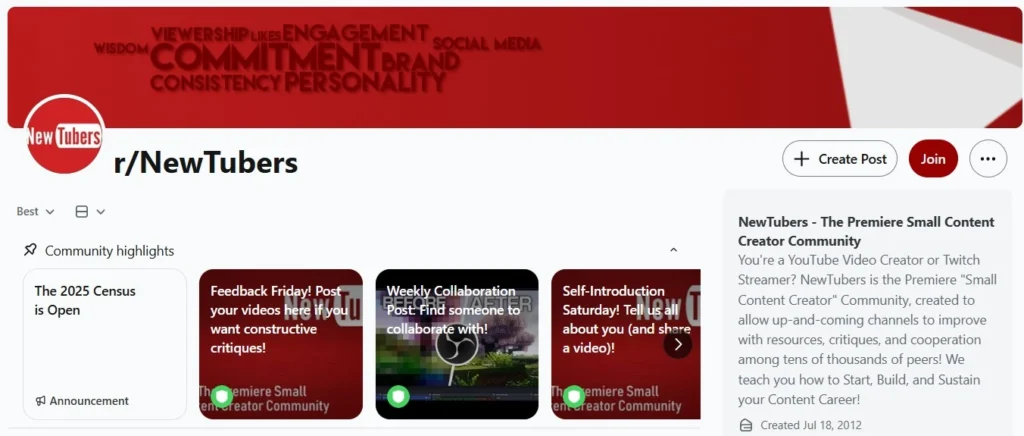
Communities like r/NewTubers and niche subreddits often include posts where creators share their channels or receive feedback.
This method is useful because it shows channels that are actively engaged in their niche communities rather than only relying on algorithmic visibility.
7. Explore Comment Sections of Larger Channels
Comment sections on popular videos often contain smaller creators participating in discussions. In some cases, commenters link to their own channels. You also read how to keywords on youtube comments.
This method can surface active creators who may not appear in search rankings.
8. Use HypeAuditor to Evaluate Engagement Quality
HypeAuditor and similar tools are used to analyze:
- Audience authenticity
- Engagement patterns
- Follower growth trends
This can help assess whether a channel’s engagement appears consistent with its subscriber size.
9. Use Growth Tracking Tools (NexLev, SubSub)
Some analytics tools track emerging channels based on:
- Rapid view growth
- Subscriber spikes
- Outlier video performance
These tools are typically used for identifying channels that are beginning to gain traction.
How Small YouTube Channels Build Early Growth
Smaller channels often rely on consistent uploads, niche topics, and direct audience interaction in early stages. Unlike large channels that benefit from established audiences, smaller creators typically grow through:
- Search-based discovery
- Community engagement
- Topic-specific content focus
- Viewer interaction in comments
These factors contribute to gradual audience building rather than immediate large-scale visibility. Increase Youtube comments to gain more to grow your video and channel.
How to Evaluate a Small Channel
Before deciding to follow or use a channel as a reference:
- Check consistency of uploads over time
- Review engagement relative to view counts
- Look for repeated commenters or discussions
- Watch multiple videos to understand content quality and style
Engagement rates should be interpreted carefully, as different platforms calculate them differently.
Tools Used for Small Channel Discovery
| Tool | Use Case | Free Access |
|---|---|---|
| YouTube Search Filters | Manual discovery by upload date | Yes |
| ChannelCrawler | Filter by subscriber range | Yes |
| VidIQ | Keyword-based channel discovery | Free tier |
| TubeBuddy | Keyword competition analysis | Free tier |
| HypeAuditor | Audience quality checks | Limited free |
| NexLev | Growth tracking | Limited |
| SubSub Analytics | Channel growth insights | Yes |
| Reddit (r/NewTubers) | Community discovery | Yes |
Conclusion
Learning how to find a small YouTube channel requires going beyond standard search results. YouTube’s recommendation system tends to prioritize content with stronger engagement history, which can make smaller creators less visible in broad searches.
Using long-tail keywords, community platforms, comment sections, and analytical tools provides a more complete way to discover smaller channels across different niches.
In many cases, smaller channels can be easier to relate to and may focus on highly specific topics that are not widely covered by larger creators. However, discovery depends heavily on the method used rather than a single search approach.
Frequently Asked Questions
Why are small YouTube channels hard to find?
Small YouTube channels are harder to find because YouTube usually ranks videos based on performance signals like views, watch time, and engagement. Bigger channels already have more of this data, so they often appear higher in search results even if smaller channels are also posting similar content
What is the easiest way to find small YouTube channels?
One of the easiest ways is to use very specific (long-tail) search terms and then apply filters like “Upload date: This month” or “This week.” This helps you see newer videos, which often come from smaller or growing channels.
Can YouTube search alone help me find small channels?
Yes, but only to a limited extent. YouTube search can show small channels, but it is biased toward videos with higher engagement. That’s why many people also use comment sections, related channels, and external tools to find smaller creators.
Do small YouTube channels make good content?
Many small channels make very good content. They are often more focused on specific topics and may spend more time engaging with their audience. However, quality varies, so it’s best to check a few videos before deciding.